
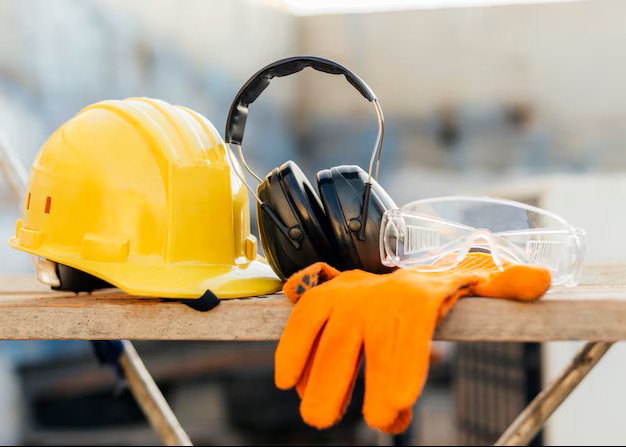
Industrial Hygiene (IH) Noise Monitoring Survey
SEC offers expert sound assessments and tailored noise monitoring to help ensure a safer, more effective work environment while maintaining compliance with federal and local environmental health regulations.
Noise Monitoring for Workplace Safety & Regulatory Compliance
Understanding IH Noise Surveys
Industrial hygiene is the science of protecting the health and safety of people in the workplace through identifying, analyzing, and controlling potential hazards. Noise surveys are within the “industrial hygiene” category, helping to maintain workplace safety and determine whether employees are exposed to sound levels that exceed permissible limits. Excessive noise can lead to a range of health effects, such as noise-induced hearing loss, that can significantly impact employees. The two primary types of noise evaluations include:
-
- Environmental Noise – External to facility, from nearby sources such as traffic, railways, industrial activity, etc.
- Occupational noise – Internal, job-related sounds generated by machines, facility processes, etc.
Recognizing when noise levels become harmful is essential for implementing appropriate safety measures. The assessment process typically begins with a walkaround inspection and decibel readings at key locations. Noise maps may be developed to visualize high-risk areas. There are two common types of noise monitoring:
-
- Personal Sampling – Collection of data through dosimeters worn by workers
- Area Sampling – Measuring fixed-location noise levels via sound meters
Key questions addressed during these inspections include:
-
- What piece of machinery contributes to excessive/dangerous noise?
- Where in the plant are workers exposed to dangerous noise?
- Who is at risk of excessive noise exposure?
Regulatory Noise Standards
Federal and environmental regulations define permissible exposure levels and required response actions. The permissible exposure limit (PEL) set by the Safety and Health Administration (OSHA) is 90 decibels (dB) over an 8-hour workday. If noise levels consistently meet or exceed the action level (AL) of 85 dBA (time-weighted average TWA), the employer is required to take the following actions:
-
- Provide hearing protection to employees
- Conduct audiometric testing for affected employees
- Implement employee training program on noise hazards
- Apply engineering or administrative controls as necessary
- Develop and maintain a written Hearing Conservation Program (HCP) that includes:
- Monitoring employee noise exposures
- Implementing feasible engineering, administrative, and work practice controls
- Providing individually fitted hearing protection with an adequate noise reduction rating (NRR)
- Training employees on noise hazards and protection measures
- Measuring baseline and annual audiometry for employees
- Implementing procedures to prevent further occupational hearing loss if identified
- Maintaining accurate exposure and audiometric test results
- For detailed breakdown of noise regulations, refer to the CFR 1910.95.
Protecting Your Workforce
Excessive occupational noise can lead to hearing loss, and when combined with ototoxic substances (e.g. solvents, metals, etc.) can worsen employee health. SEC helps identify these high-risk exposure scenarios and implement practical noise control strategies to safeguard employee health and meet OSHA compliance standards. Potential noise control methods include:
-
- Elimination – Physically remove hazard
- Substitution – Replace hazard
- Engineering Controls – Isolate employee from loud equipment utilizing sound absorption panels, low-noise tools, and maintaining/lubricating machinery
- Administrative Controls – Change how employees work to avoid hazard (e.g. Rotate workers to quieter equipment area, reduce hours/day at noise stations, etc.)
- Personal Protective Equipment (PPE) – Protecting workers from hazard and selecting PPE based on Noise Reduction Rates (NRR)
Seeking Help with Noise Monitoring & Surveys?
Our SEC team is here to support you and help build a safer workplace environment! Do not hesitate to reach out to us via the “Get a Quote” button below.
Serving the Southeast
NASHVILLE | CHATTANOOGA | BIRMINGHAM
Serving the Southeast
NASHVILLE | CHATTANOOGA | BIRMINGHAM
NASHVILLE
CHATTANOOGA
BIRMINGHAM