
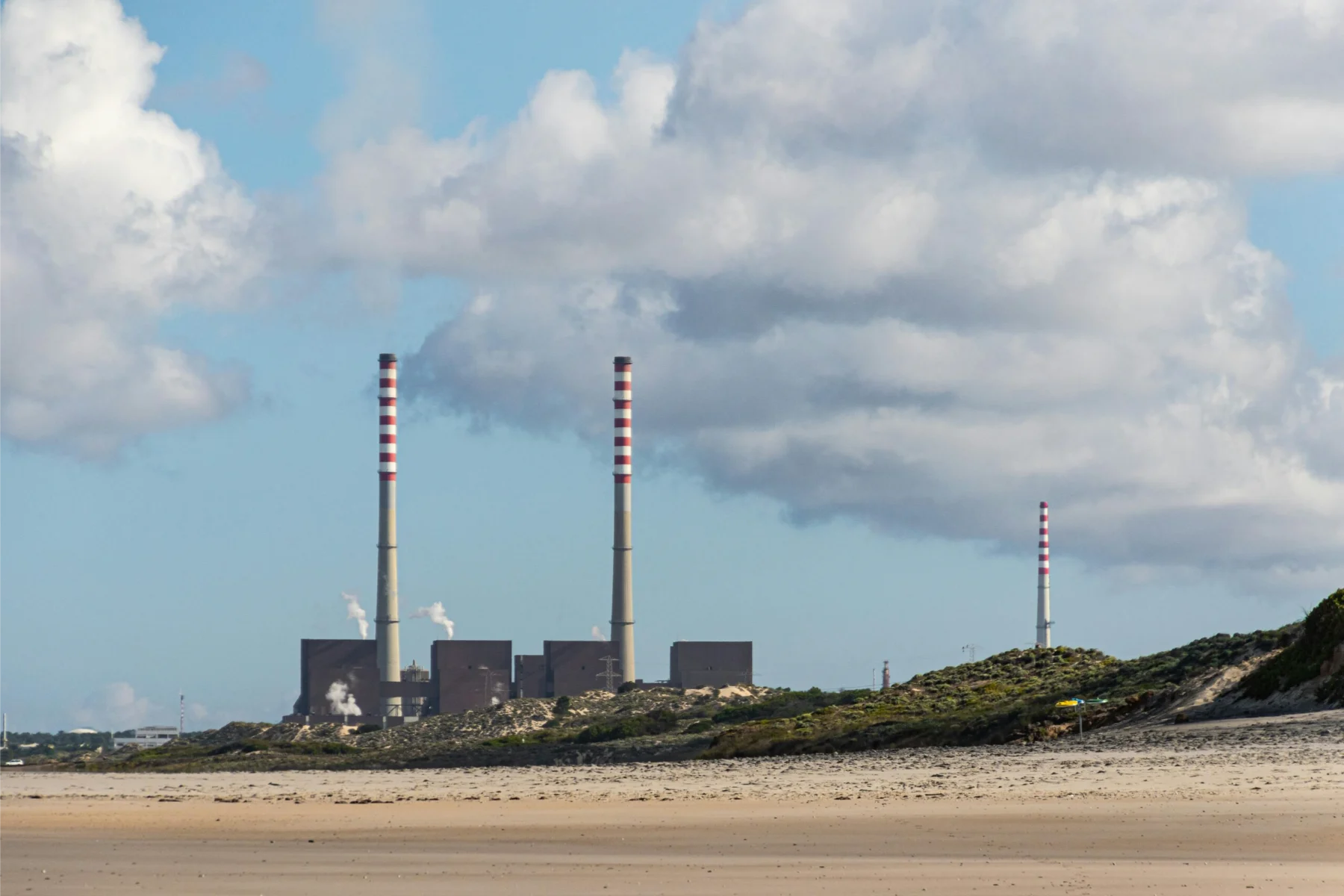
Air Dispersion Modeling: New Source Review (NSR)
SEC supports clients through all phases of New Source Review (NSR) permitting by providing technically rigorous air dispersion modeling analyses. Our air quality evaluations are tailored to your facility, operational changes, and new construction, ensuring that your operations remain fully compliant with federal and state air quality regulations.
Our Air Dispersion Expert: Liesa Elliott
Air Quality Monitoring for Regulatory Compliance
New Source Review
New Source Review (NSR) is a federal preconstruction permitting program under the Clean Air Act that applies to new major stationary sources and major modifications that may result in significant increases in air pollutant emissions. NSR is designed to ensure that industrial growth occurs while protecting public health and air quality.
NSR applicability is triggered when a proposed project exceeds pollutant-specific major source or major modification thresholds established for criteria pollutants and their regulated precursors under the National Ambient Air Quality Standards (NAAQS). These thresholds vary by pollutant type and by whether a source is located in an attainment or nonattainment area.
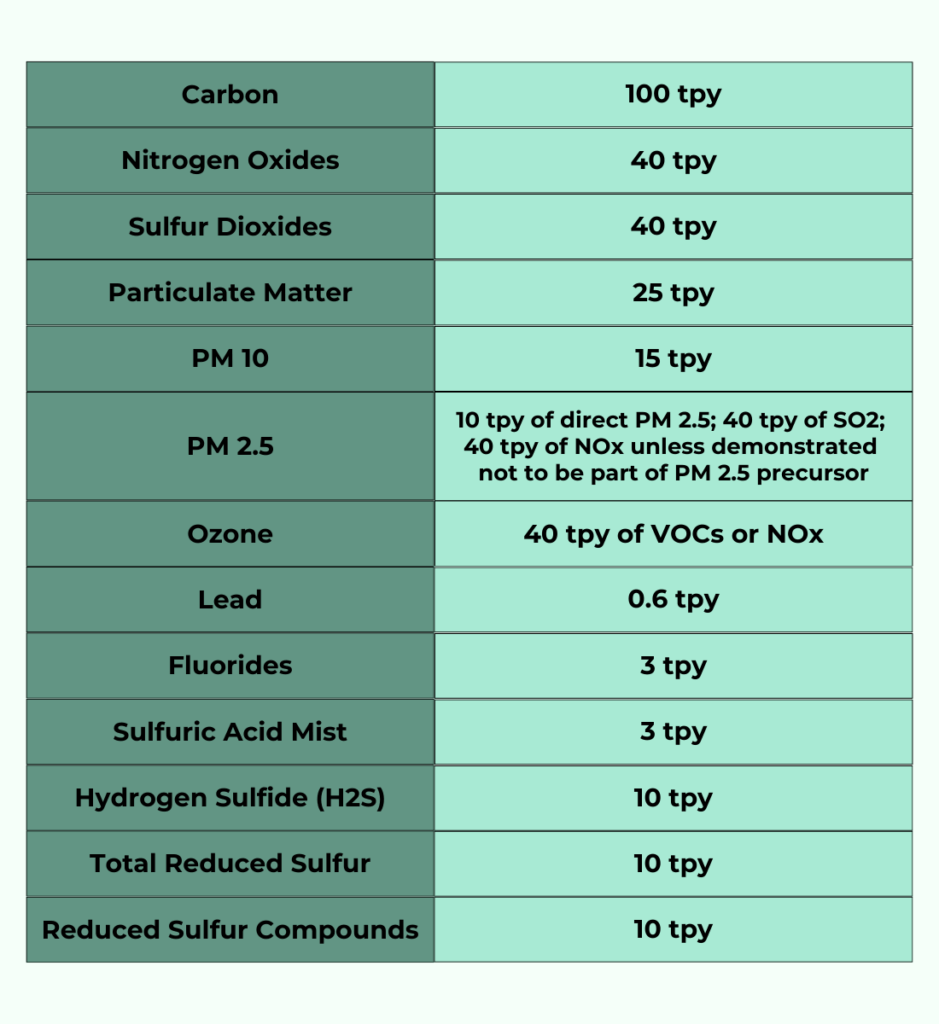
NSR Significance Threshold 40 CFR 51.166(b)(23)
Attainment New Source Review
Attainment areas are regions that meet the National Ambient Air Quality Standards (NAAQS). In these areas, air dispersion modeling is a key component of Prevention Significant Deterioration (PSD) permitting under the New Source Review (NSR) program. The objective of PSD air dispersion modeling is to demonstrate that emissions from new major sources or major modifications will not significantly degrade existing air quality.
Under PSD, air dispersion modeling is used to:
-
- Predict ambient concentrations of regulated pollutants
- Demonstrate compliance with NAAQS, which is based on predicted ambient concentrations, plus representative background concentrations
- Evaluate PSD increment consumption
- Support Best Available Control Technology (BACT) determinations
EPA-approved models such as AERMOD are typically used with site-specific emissions data, meteorology, terrain, and receptor grids to assess project impacts and support permitting decisions.
Non-Attainment New Source Review
In nonattainment areas, where one or more NAAQS are not met, air dispersion modeling plays a critical role in supporting Non-Attainment New Source Review (NNSR) permitting. Dispersion modeling is utilized to evaluate how emissions from new sources of major modifications may affect existing air quality conditions and to support regulatory determinations.
Under NNSR, air dispersion modeling is used to:
-
- Predict ground-level concentrations of criteria pollutants at nearby receptors
- Evaluate whether a project would cause or contribute significantly to air quality impacts
- Support permitting determinations tied to Lowest Achievable Emission Rate (LAER) controls
- Inform emission offset strategies by quantifying project impacts
Unlike attainment modeling, NNSR Modeling:
-
- Is applied in areas where one or more National Ambient Air Quality Standards (NAAQS) are not met
- Focuses on evaluating whether emissions from new sources or major modifications would cause or significantly contribute to existing air quality violations or interfere with progress toward attainment
- Does not include PSD increment consumption analyses, as nonattainment areas do not have an allowable air quality increment to preserve
- Is commonly paired with emissions-based demonstrations and emission offset requirements
- Relies on conservative modeling assumptions to support regulatory review and public participation
To learn more about NNSR regulations and air permitting requirements, visit our NNSR page here.
Need Modeling Support New Source Review?
If you need support, please do not hesitate to reach out via the “Free Consultation” button below,
as we would be more than happy to help provide expert guidance and confidence through the process.
Serving the Southeast
NASHVILLE | CHATTANOOGA | BIRMINGHAM
Serving the Southeast
NASHVILLE | CHATTANOOGA | BIRMINGHAM
NASHVILLE
CHATTANOOGA
BIRMINGHAM