
What to know about:
California Senate Bill 253 (SB 253)

A Note on Interpretation
This article is a plain-language summary based on SB 253 and CARB's publicly available guidance as of August 2026 — it is not legal advice. Several details are still evolving or open to interpretation, including subsidiary reporting obligations, how SB 253 interacts with related laws like SB 261, the final list of required Scope 3 categories, and the timing of assurance requirements. Please confirm specific compliance obligations with legal counsel before treating anything here as a final requirement.
Quick Takeaways
- SB 253 requires U.S. companies with over $1 billion in revenue that do business in California to publicly report their greenhouse gas emissions — even if they're not headquartered there.
- The first deadline (Scope 1 & 2) is November 10, 2026. Scope 3 reporting begins in 2027.
- Scope 3 is the heaviest lift — it depends on data from your suppliers, shippers, and customers.
- Some requirements (Scope 3's exact scope, assurance timing, and how SB 253 interacts with SB 261) are still being finalized.
Executive Summary:
California passed a new law in 2023 called Senate Bill 253 (SB 253), also known as the Climate Corporate Data Accountability Act. It requires large companies doing business in California to publicly report their greenhouse gas (GHG) emissions every year.
If your company is organized under U.S. law, does business in California, and earns more than $1 billion a year, this law likely applies to you — even if your headquarters is nowhere near California.
The California Air Resources Board (CARB) runs the program. CARB originally set August 10, 2026 as the deadline for the first round of reporting (Scope 1 and Scope 2 emissions), then pushed that back to November 10, 2026. Scope 3 reporting starts in 2027, and stricter third-party verification requirements begin in 2030.
Key Reporting Dates:
reporting due
reporting begins
requirements begin
Why This Matters Right Now
1. It can be a heavy lift. Scope 3 reporting depends on emissions data from your suppliers, shippers, and customers — data most manufacturers don't have on hand today. Building that pipeline takes time.
2. It's close, and it's mandatory. The first reporting deadline is November 10, 2026. SB 253 carries real regulatory, financial, and reputational risk for companies that show up unprepared — this is a compliance deadline, not a someday project.
Who Does This Apply To?
SB 253 generally applies to companies that:
- Are organized under U.S. law;
- Do business in California; and
- Have total annual revenue over $1 billion.
Your company does not need to be headquartered in California for this law to apply. It's worth reviewing your corporate structure, California business activity, subsidiaries, and reporting boundaries — that is, whether you consolidate emissions using an operational control approach (facilities you operate) or a financial control approach (entities you control financially, even without day-to-day operating control) — to determine where you stand. If your revenue moves up and down from year to year, CARB uses whichever of the past two fiscal years was lower.
A subsidiary of a parent company that already qualifies under SB 253 generally does not need to file a separate report of its own, as long as the parent's report covers it.
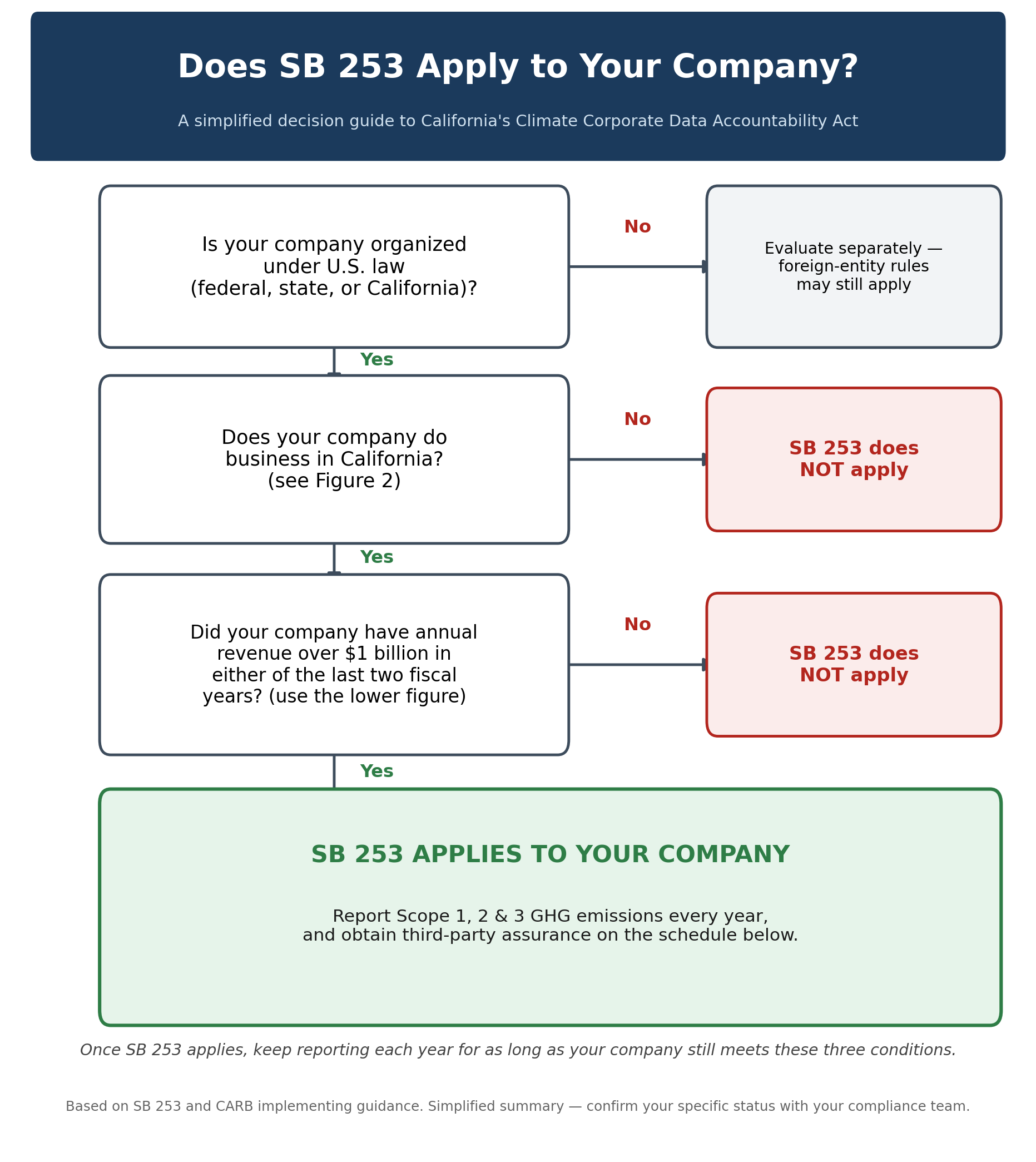
Figure 1: Simplified SB 253 applicability guide
So what actually counts as “doing business in California”? CARB defines this by referencing California Revenue and Taxation Code Section 23101. In plain terms, your company is considered to be doing business in California if it engages in a transaction for financial gain in the state, and at least one of the following is also true:
- Your company is organized or commercially domiciled in California; or
- Your company's California sales, property, or payroll exceed a set dollar threshold — about $757,070 for 2025, adjusted each year for inflation; or
- 25% or more of your company's total sales, property, or payroll are located in California.
CARB based this definition on Revenue and Taxation Code § 23101, but left out the property and payroll tests found in subsections (b)(3) and (b)(4) of that section. The California sales threshold itself is the lesser of $500,000 or 25% of a company's total sales, adjusted annually for inflation — which worked out to roughly $757,070 for 2025. The California Franchise Tax Board's website has the current figure.
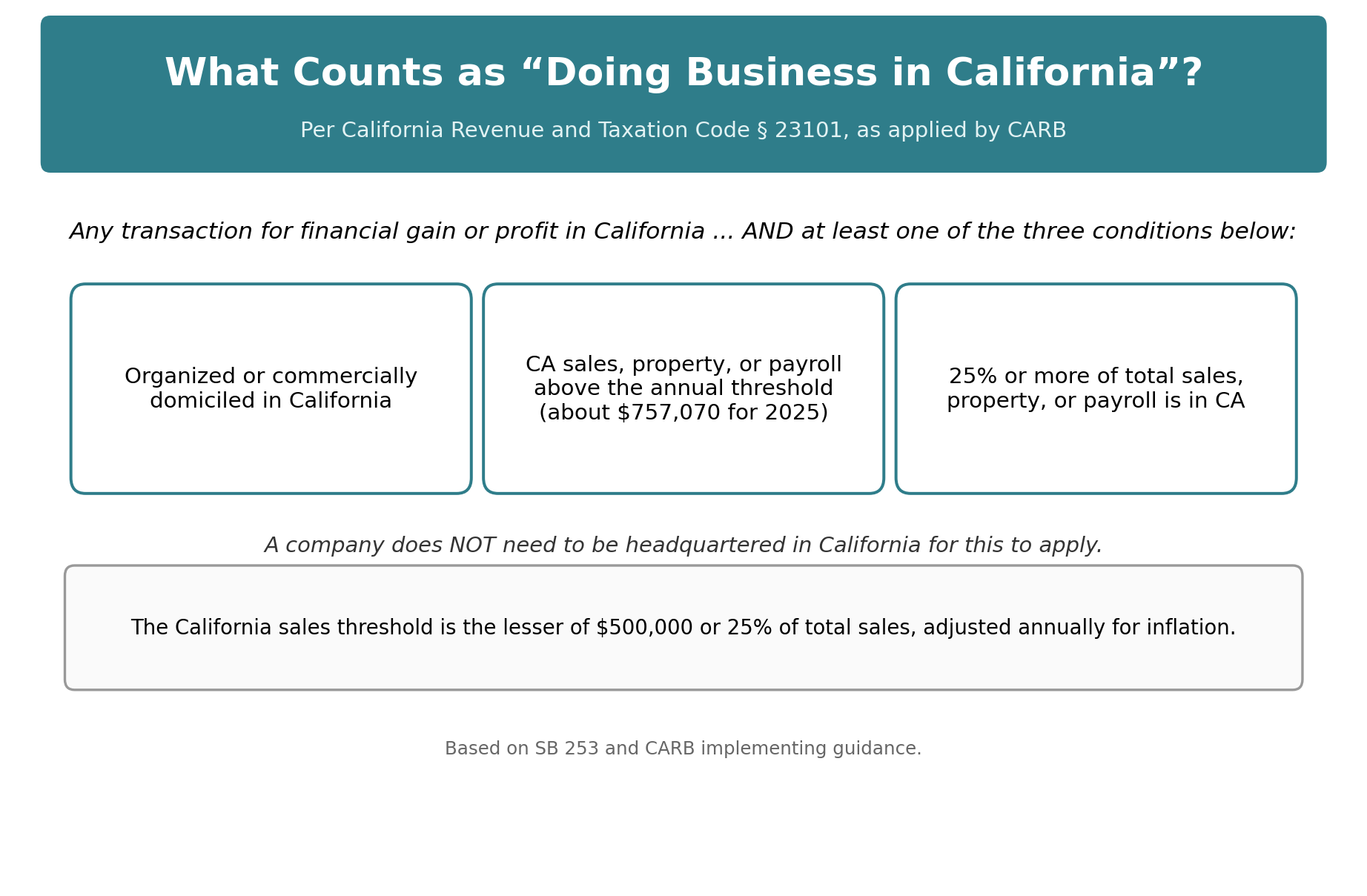
Figure 2: What counts as “doing business in California”
A related law, SB 261 (the Climate-Related Financial Risk Act), uses a lower $500 million revenue threshold and requires separate climate-related financial risk disclosures. Some manufacturers may need to address both laws, not just SB 253.
GHG Reporting Requirements:
Companies covered by SB 253 must report emissions in line with the GHG Protocol, the standard framework used internationally for this kind of accounting. Reporting is broken into three categories, called “scopes.”
Scope 1 — Direct Emissions:
Emissions that come directly from sources your company owns or controls — for example, burning natural gas, propane, diesel, or gasoline in your own equipment and vehicles, plant processes, or refrigerant leaks.
Scope 2 — Purchased Electricity:
Indirect emissions tied to the electricity, steam, heat, or cooling your company purchases.
Scope 3 — Value Chain:
All other indirect emissions up and down your value chain — your suppliers, transportation providers, and customers. There are 15 possible categories here, though not every one applies to every company. Common ones for manufacturers include purchased goods and services, capital goods, upstream and downstream transportation, employee commuting, waste generated in operations, and the use of products you sell.
Scope 3 is expected to be the hardest part of this law to satisfy. Much of the needed data lives outside your own company — with suppliers, carriers, or customers who may not always be quick (or willing) to share it. Even once the data is in hand, the calculations involve enough moving parts that the process can get complicated fast.
CARB has also floated narrowing this requirement. As of its March 2026 workshop, the agency was weighing three options: requiring all 15 categories, phasing them in by industry sector, or starting with just five commonly reported categories, with the rest voluntary at first. None of this is finalized, so treat the exact scope of Scope 3 reporting as still evolving until CARB issues final rules.
Assurance and Data Quality:
SB 253 also requires an independent third party to check your emissions data, and those checks get more rigorous over time. Because of that, it's worth building your GHG tracking system now with future verification in mind — shortcuts and loose assumptions today tend to become problems later.
Starting in 2027, Scope 1 and 2 emissions will need “limited assurance” from an accredited independent provider, using standards such as AA1000, AICPA AT-C 210, ISAE 3000/3410, ISSA 5000, or ISO 14064-3. The stricter “reasonable assurance” level referenced for 2030 has not yet been formally proposed in rulemaking, so that date and its requirements could still shift.
The law is specific about how emissions calculations should be done. Beginning in 2026, reporting companies must measure and report emissions consistent with the Greenhouse Gas Protocol Corporate Accounting and Reporting Standard and the Greenhouse Gas Protocol Corporate Value Chain (Scope 3) Accounting and Reporting Standard, both developed by the World Resources Institute and the World Business Council for Sustainable Development — including guidance on acceptable data sources for Scope 3 calculations, such as industry-average and proxy data when direct data isn't available (Sec. 2, § 38532(c)(ii)).
The law also includes a safe harbor: a company is not penalized for a Scope 3 emissions misstatement made in good faith and with a reasonable basis for its estimate.
Meeting these initial data-collection, calculation, and reporting requirements matters — it's how you avoid unnecessary fees or violations down the line.
As you build your GHG inventory, plan to document:
- Organizational and operational boundaries;
- Activity data and data sources;
- Emission factors;
- Calculation methodologies;
- Assumptions and estimates;
- Data-quality controls;
- Responsible personnel; and
- Supporting records.
You should be able to trace a clear line from your original data source, through the emission factor and calculation, to the number you ultimately report.
Implications for Manufacturing Companies:
For manufacturers, SB 253 usually means real coordination across facilities and departments. Your environmental and sustainability team will likely need to work with finance, procurement, supply chain, operations, IT, and legal to collect and validate emissions data — and that kind of cross-functional effort takes time to set up well.
Data you'll likely need includes:
- Electricity and natural gas consumption;
- Propane, diesel, and gasoline use;
- Refrigerant and process emissions;
- Purchased materials and capital equipment;
- Waste generation;
- Transportation and logistics;
- Business travel; and
- Supplier-specific emissions information.
Recommended Compliance Approach:
Companies potentially subject to SB 253 should take a phased approach:
- Determine Applicability — Confirm your revenue, California business activity, legal entities, and reporting boundaries.
- Assess Existing Data — Inventory your current GHG, energy, utility, fuel, supplier, and ESG reporting systems, and identify the gaps.
- Establish Scope 1 and 2 Controls — Standardize data collection, emission factors, calculation methods, quality controls, and documentation across all facilities.
- Prepare for Scope 3 — Identify which Scope 3 categories are material to your business, set supplier data-sharing expectations, and build estimation methods for the gaps.
- Prepare for Assurance — Put documented procedures, internal controls, and recordkeeping in place that can support a future third-party review.
Business Risks and Opportunities:
Not preparing creates regulatory, data-quality, financial, supply-chain, and reputational risk — and because this reporting is public, any gaps or inconsistencies will be visible to customers, investors, and regulators alike. Making sure your reported emissions are accurate, consistent, and well-supported matters as much as the reporting itself.
On the other hand, SB 253 can be a useful forcing function. Getting ahead of it is a chance to sharpen your corporate energy management, spot emissions-reduction opportunities, strengthen supplier relationships, standardize your environmental data, improve your broader ESG reporting, and build a foundation that makes future climate-related requirements easier to handle.
Conclusion:
SB 253 marks a real shift — from voluntary climate reporting to mandatory, public disclosure of GHG emissions for any company that clears the $1 billion revenue threshold and does business in California. Compliance calls for more than running the numbers once a year; it calls for a reliable, documented, and repeatable GHG accounting system.
With the first Scope 1 and 2 deadline landing this November, and Scope 3 reporting starting in 2027, now is the time to nail down applicability, assess data gaps, standardize calculations, and start preparing for Scope 3 and future assurance requirements. Companies that start early will have a far easier path than those that wait.
At Stevens EHS Consulting, our team has deep experience across all three emissions scopes — calculation, validation, and reporting. We can help make this regulation simpler, clearer, and more accurate, so you don't have to become an expert in a brand-new area of compliance on your own.
Need Additional Support?
If you have any additional questions, please do not hesitate to rcontact Carter Venable at Carter@StevensEHS.com or reach out to us via the “Get a Quote” button below!