

Criteria Pollutants
SEC provides expert guidance to help facilities monitor, track, and comply with the EPA’s National Ambient Air Quality Standards (NAAQS) for criteria pollutants. Our team supports clients with emission evaluations, permitting strategies, and compliance planning to ensure operations meet federal and state air quality requirements while minimizing regulatory risk.
Criteria Pollutant Regulations & Compliance Standards
What Are Criteria Pollutants?
Criteria pollutants are six common, widespread air pollutants identified by the US Environmental Protection Agency (EPA) as harmful to the public and environmental health. Under the Clean Air Act, the EPA set National Ambient Air Quality Standards (NAAQS) for each pollutant to monitor, control, and reduce emissions, protecting sensitive populations such as children, elderly, and asthmatics. The areas are designated as either:
-
- Attainment – Meeting the NAAQS standards
- Non-Attainment – Failing to meet the NAAQS standards
The Six Criteria Pollutants
The six criteria pollutants regulated by NAAQS are:
-
- Ozone (O₃) – Ground-level pollutant formed when nitrogen oxides (NOx) and volatile organic compounds (VOCs) react in sunlight. Ground-level ozone is a key component of smog and can cause serious respiratory health effects.
- Particulate matter (PM) – Tiny particles suspended in air, including PM₁₀ (≤10 micrometers) and fine PM2.5 (≤2.5 micrometers).
- Frame of reference: A diameter of human hair is approximately 100 micrometers, also known as micron or one-millionth of a meter.
- Carbon Monoxide (CO) – A colorless, odorless gas primary formed by incomplete combustion.
- Sulfur Dioxide (SO₂) – Produced during fossil fuel combustion, contributing to haze, acid rain, and respiratory issues.
- Nitrogen Dioxide (NO₂) – A highly reactive gas formed during combustion that irritates the respiratory system. The nitrogen dioxide forms from nitrogen in the fuel and/or nitrogen in the air during combustion.
- Lead (Pb) – A metal emitted primarily from metal processing and piston-engine aircraft, causing neurological and cardiovascular disruptions.
Criteria Pollutant Thresholds
EPA establishes quantitative thresholds for each criteria pollutant within the NAAQS program to determine allowable levels in ambient (i.e. outdoor) air.
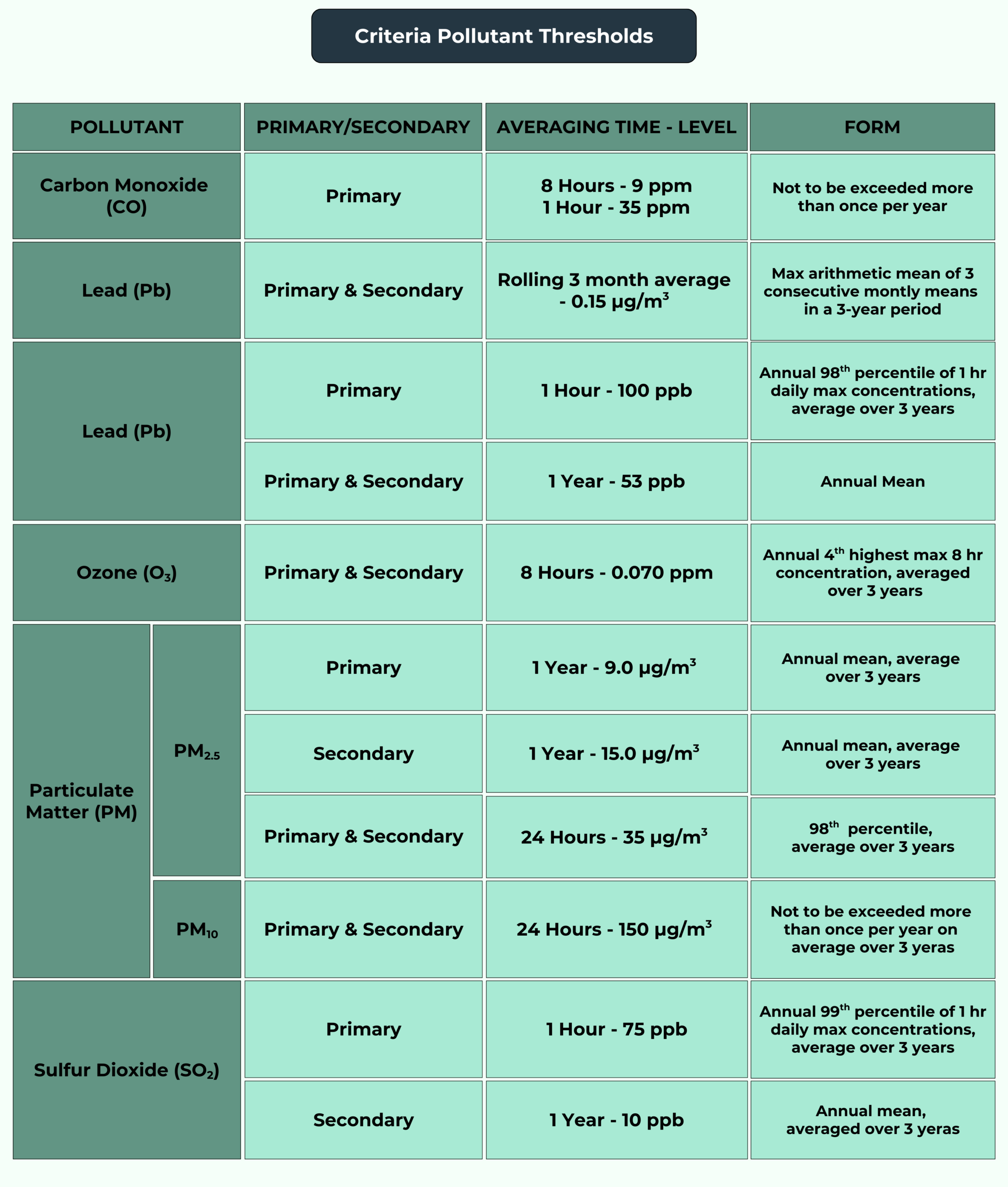
How EPA Establishes NAAQS
Under the Clean Air Act, EPA is required to review and set national ambient air quality standards for six criteria pollutants based on the best available scientific evidence.
Note: Primary standards are designed to protect public health with adequate margin of safety, while secondary standards focus on protecting public welfare including visibility, vegetation, and materials.
Implementation & Management of Criteria Compliance
State Implementation Plans (SIPs)
Once EPA sets or revises NAAQS, each state must develop a State Implementation Plan (SIP) to demonstrate how they will achieve and maintain the standards. A SIP includes legally enforceable regulations, monitoring and reporting procedures, and emission control strategies for sources contribution to nonattainment. The timeline after EPA sets or revises the NAAQS:
-
- Within 2 years: EPA designates attainment/non-attainment areas.
- Within 3 years: States must submit SIPs.
- 18-24 months after designation: Non-attainment SIPs are due, varying by pollutant and classification.
Air Quality Index (AQI)
The Air Quality Index (AQI) is a tool used to communicate daily air quality to the public. The AQI converts measured ambient concentrations of criteria pollutants into a simple color-coded scale ranging from “Good” to “Hazardous.” The higher the AQI values, the poorer the air quality and increased health concerns.
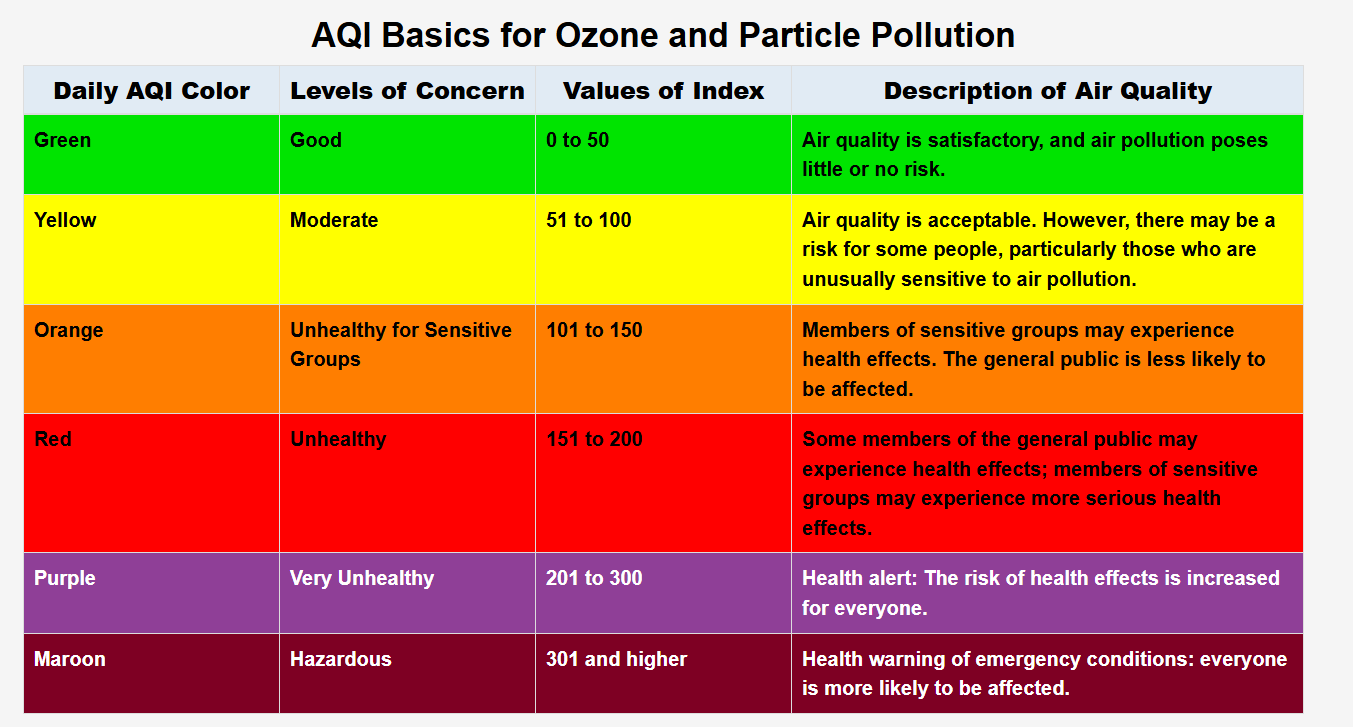
Chart from AirNow.gov
Facility Impacts & Air Permitting
Criteria pollutant emissions directly influence air permitting requirements for industrial facilities. Major sources of criteria pollutants may trigger requirements for operating permits such as Title V and New Source Review (NSR) permits, including Prevention of Significant Deterioration (PSD) in areas meeting NAAQS). Our SEC experts are here to support your facility in calculating your potential to emit (PTE), evaluate best conservative assumptions, and develop process flow diagrams. All in all, supporting your facility in meeting all necessary permitting requirements and air compliance regulations.
Seeking Criteria Pollutant Regulation Support?
Do not hesitate to reach out to us via the “Free Consultation” button below! Our experts are here
to help you identify your needs and ensure you are meeting the Clean Air Act thresholds and regulations.
Serving the Southeast
NASHVILLE | CHATTANOOGA | BIRMINGHAM
Serving the Southeast
NASHVILLE | CHATTANOOGA | BIRMINGHAM
NASHVILLE
CHATTANOOGA
BIRMINGHAM