
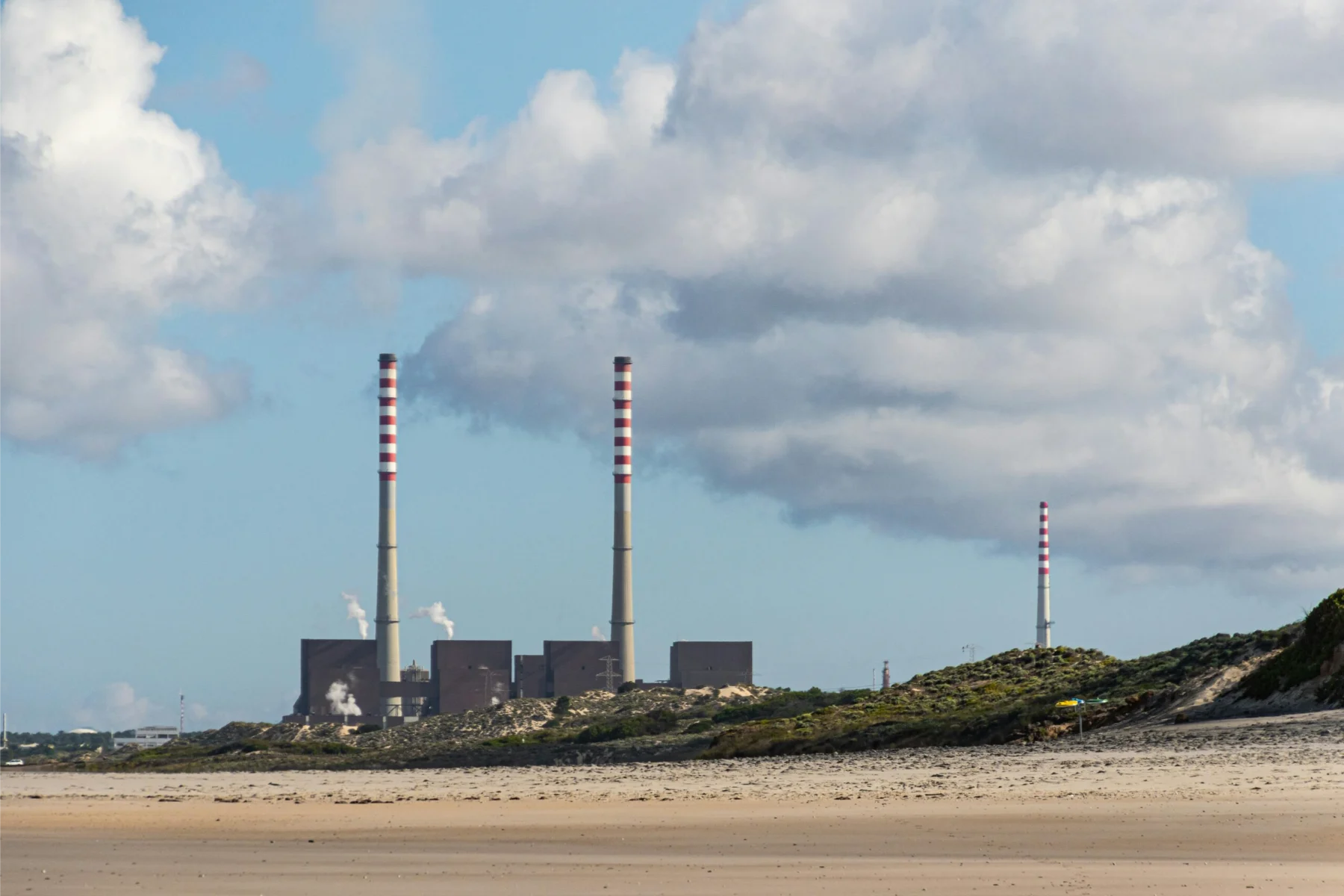
Air Dispersion Modeling: Prevention of Significant Deterioration (PSD)
SEC provides comprehensive Prevention of Significant Deterioration (PSD) air dispersion modeling services, including modeling protocol development, AERMOD analyses, and full ambient air quality evaluations in alignment with U.S. EPA regulations and state-specific permitting requirements.
Our Air Dispersion Expert: Liesa Elliott
PSD Air Dispersion Modeling Requirements & Compliance Strategy
Overview of PSD Air Dispersion Modeling
Prevention of Significant Deterioration (PSD) air dispersion modeling is a required component of the Clean Air Act permitting process for new or modified major stationary sources located in attainment or unclassifiable areas, which are regions that meet the National Ambient Air Quality Standards (NAAQS).
PSD modeling is conducted to demonstrate that a project will not:
-
- Cause or significantly contribute to a violation of NAAQS
- Exceed allowable PSD increment concentrations
- Result in additional adverse air quality impacts
PSD requirements are codified under:
-
- 40 CFR 52.21 (federal PSD program)
- 40 CFR 51.166 (state PSD programs)
- Appendix W to 40 CFR Part 51 (Guideline on Air Quality Models)
The US is divided into PSD area classifications, each with different allowable air quality increment thresholds and protection levels. The three PSD area classifications are:
-
- Class I – Most Stringent Protection
- Includes certain national parks, wilderness areas, and other federally protected lands.
- Receives the highest level of air quality protection.
- Requires tighter PSD increment limits.
- Often requires visibility and Air Quality Related Values (AQRV) analyses.
- Coordination with Federal Land Managers (FLMs) is typically required if impacts are possible.
- Class II – Moderate Protection
- Applies to most areas of the United States.
- Projects must demonstrate compliance with:
- NAAQS
- PSD increments
- Represents the default classification unless redesignated.
- Class III – Least Stringent
- Intended for areas where more industrial growth is desired.
- Has the largest allowable increments.
- Currently, no areas in the U.S. are designated as Class III.
- Class I – Most Stringent Protection
Allowable PSD increment concentrations vary by classification, which directly affects modeling requirements and compliance demonstrations.
What Triggers a PSD Modeling?
PSD modeling is required once a project has been determined to trigger PSD review based on major source thresholds and pollutant-specific Significant Emission Rates (SERs). For detailed explanation of PSD applicability, refer to our PSD Permitting page.
Once PSD applicability is triggered, an ambient air quality analysis must be performed. This includes air dispersion modeling to evaluate compliance with NAAQS and PSD increment requirements. Initial screening is typically conducted by comparing project-only impacts to pollutant-specific Significant Impact Levels (SILs).
-
- If modeled impacts are below SILs, additional cumulative modeling for that pollutant may not be required.
- If modeled impacts exceed SIL thresholds, a refined cumulative modeling analysis must be conducted, incorporating nearby sources and background concentrations to evaluate compliance with NAAQS and PSD increment requirements.
PSD Modeling Process
PSD modeling is typically conducted through structured phases:
-
- Regulatory Applicability Assessment
- Confirm PSD applicability status and regulated pollutants
- Align modeling approach with permitting strategy
- Modeling Protocol Development – Develop and submit a detailed modeling protocol to the reviewing agency. The protocol typically addresses:
- Model selection and regulatory justification
- Meteorological data selection and processing
- Receptor grid design
- Building Downwash Analysis
- Background concentration methodology
- Nearby source inclusion criteria
- Nearby Class I areas inclusion/exclusion and methodologies
- Additional Impact Analysis methodology
- Source Impact (SIL) Analysis – Model project-only impacts and compare results to pollutant specific SIL values
- If the modeling impacts are below the SIL values for a particular pollutant, then the modeling analysis is complete for that pollutant.
- Cumulative Impact Analysis – If SIL are exceeded, refined modeling on nearby existing sources and ambient background concentrations are conducted
- Class II – PSD Increment & NAAQS Analysis – Evaluate compliance with Class II PSD increment limits and NAAQS Standards
- Class I – PSD Increment & NAAQS Analysis, if required – Evaluate compliance with Class I PSD increment limits and NAAQS Standards as directed by your State Agency
- Additional Impact Analysis – Additional assessment of:
- Visibility impacts (Class I areas)
- Impacts on soil and vegetation
- Growth-related and secondary pollutant impacts (e.g. ozone, secondary PM, etc.)
- Final Reporting & Agency Coordination – Prepare comprehensive PSD modeling report for regulatory review and public notice.
- Regulatory Applicability Assessment
Core PSD Modeling Requirements
PSD modeling must comply with EPA’s Guideline on Air Quality Models (Appendix W to 40 Part 51). The commonly utilized modeling tools are:
-
- AERMOD
- EPA’s preferred near-field dispersion model for most PSD applications
- Accounts for terrain, building downwash, and refined meteorological processing
- CALPUFF
- Used in certain cases for long-range transport
- May be applied in some Class I impact analyses depending on regulatory requirements
- AERMOD
PSD modeling requires detailed and defensible input parameters, including:
-
- Emission rates – Stack and fugitive
- Stack parameters – Height, diameter, exit velocity, temperature
- Five years of representative of meteorological data (unless otherwise approved)
- Building downwash analysis (via BPIP-PRIME)
- Terrain and receptor grid design
- Ambient background concentrations
- Nearby source inventory (based on impact radius)
All model selection decisions, assumptions, and input methodologies must be clearly documented within the modeling protocol and final PSD report to ensure regulatory defensibility.
Seeking Support with PSD Modeling?
Do not hesitate to reach out to us via the “Free Consultation” button below! SEC provides
support tailored to your facility to help navigate PSD applicability, modeling strategy, and regulatory coordination with confidence.
Serving the Southeast
NASHVILLE | CHATTANOOGA | BIRMINGHAM
Serving the Southeast
NASHVILLE | CHATTANOOGA | BIRMINGHAM
NASHVILLE
CHATTANOOGA
BIRMINGHAM