
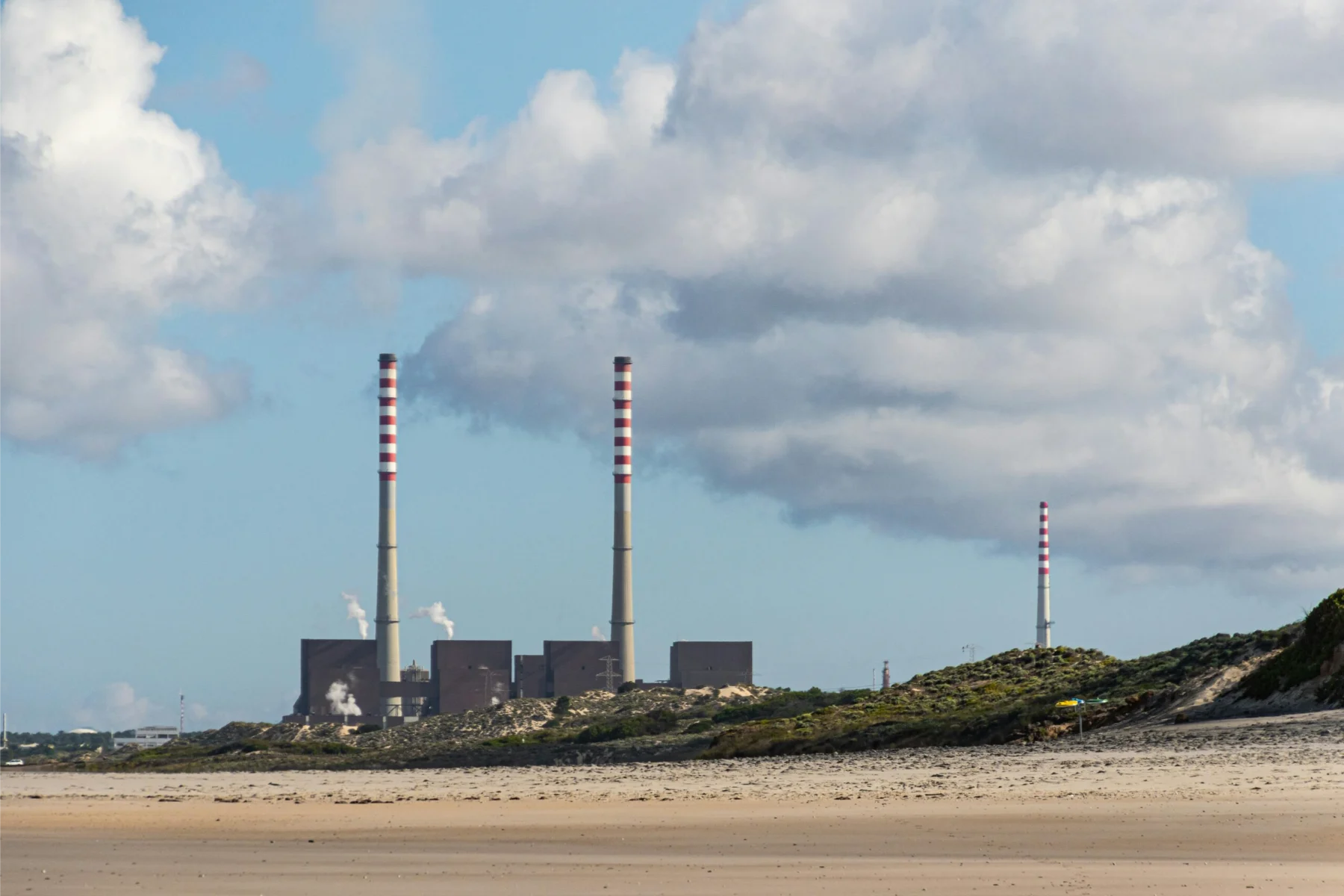
Air Dispersion Modeling: Title V
SEC provides comprehensive air dispersion modeling services using EPA-approved models to evaluate the impact of facility emissions on ambient air quality and support compliance with Title V air permits and related regulatory programs.
Our Air Dispersion Expert: Liesa Elliott
Air Dispersion Modeling for Regulatory Compliance
What is Air Dispersion Modeling in Title V?
- Air dispersion modeling is a critical component of air permitting and compliance programs under the Clean Air Act, particularly for facilities subject to Title V Air Permitting. It uses mathematical formulations to characterize how pollutants emitted from a facility disperse in the atmosphere and to evaluate their potential impact on ambient air quality.
These models simulate the combined effects of meteorological conditions, terrain, and source-specific characteristics to predict pollutant concentrations at downwind locations, known as receptors, which include areas at and beyond a facility’s property line. Air dispersion modeling is used by permitting authorities to determine whether emissions may contribute to violations of air quality standards or exceed allowable health-based or toxic risk thresholds.
Under Title V, dispersion modeling is commonly used to:
-
- Predict pollutant concentrations at and beyond the facility property boundary
- Evaluate maximum ground-level impacts from emission sources
- Demonstrate compliance with the National Ambient Air Quality Standards (NAAQS)
- Support permitting determinations under New Source Review (NSR) and Prevention of Significant Deterioration (PSD) programs
- Identify the need for emission controls, operational limits, or permit conditions
Modeling analyses are required for Title V permit applications, permit modifications, and facility expansions or operational changes. By evaluating worst-case operating scenarios, air dispersion modeling ensures regulatory compliance across all allowable operating conditions and provides permitting authorities with defensible basis for permit approval and ongoing compliance oversight.
EPA-Approved Title V Dispersion Models
Regulatory agencies require the use of EPA-approved air quality models consistent with guidance from the EPA Support Center for Regulatory Air Models (SCRAM).
-
- AERMOD (Preferred Model)
- EPA-preferred steady-state plume dispersion model used for most regulatory applications
- Incorporates advanced atmospheric science based on planetary boundary layer turbulence structure and scaling concepts
- Evaluates both surface and elevated sources in simple and complex terrain
- Commonly used to:
- Assess industrial stack emissions
- Model area and volume sources
- Evaluate property line and community impacts
- Support Title V, PSD, and SIP compliance demonstrations
- CTDMPLUS
- Refined point-source Gaussian air quality model
- Used for complex terrain applications across all atmospheric stability conditions
- Seldom used – almost entirely replaced by AERMOD
- OCD (Offshore and Coastal Dispersion Model)
- Straight-line Gaussian model
- Evaluates air quality impacts of offshore emissions from point, area, or line sources on coastal regions
- Partially replaced by AERMOD – Offshore platform downwash algorithms from OCD were integrated into AERMOD for stacks only
- AERMOD (Preferred Model)
Inputs Required for Air Dispersion Modeling
Accurate air dispersion modeling relies on detailed, site-specific data that reflect facility operations and surrounding environmental conditions. Key inputs include:
-
- Source Parameters – Information for point, area, and volume sources, including emission release locations, stack heights and diameters, exit velocities, and exhaust temperatures
- Emission Rates – Pollutant type and quantity, evaluated under maximum allowable emission limits and worst-case operating scenarios
- Meteorological Data – Hourly wind speed and wind direction, ambient temperature, mixing height, atmospheric stability, and turbulence characteristics
- Terrain and Receptors – Digital Elevation Model (DEM) data used to account for terrain influences on plume dispersion and to model downwind concentration impacts
- Source Types Modeled
- Point Source: Stack and vents
- Area sources: Storage piles and open processing areas
- Volume sources: Fugitive emissions and building-related releases
Staying Ahead of Title V Air Dispersion Modeling Compliance
Air dispersion modeling requirements are driven by multiple federal and state air quality programs, including:
-
- Title V Operating Permits
- PSD Permitting and BACT Analysis
- Nonattainment New Source Review (NNSR)
- State Implementation Plans (SIPs)
SEC provides end-to-end dispersion modeling support tailored to regulatory requirements and facility-specific conditions. From applicability determinations and data collection through modeling execution and agency submittals, we help facilities stay compliant and avoid permitting delays.
Need Support with Air Dispersion Modeling?
If your facility requires air dispersion modeling for Title V permitting, project planning, or regulatory compliance,
SEC’s experts are here to help! Contact us below using the “Free Consultation” button to speak with an air quality
professional and ensure your modeling analysis is accurate, defensible, and agency ready.
Serving the Southeast
NASHVILLE | CHATTANOOGA | BIRMINGHAM
Serving the Southeast
NASHVILLE | CHATTANOOGA | BIRMINGHAM
NASHVILLE
CHATTANOOGA
BIRMINGHAM