
Program Development & Support: Respiratory Protection
SEC provides expert support in developing and maintaining OSHA-compliant Respiratory Protection Programs (RPPs) that safeguard employees from airborne contaminants. Our experts help employers design written programs that meet 29 CFR §1910.134 requirements through comprehensive planning, training, fit testing, and documentation.
Respiratory Protection Program Development & Support
What is a Respiratory Protection Program?
A comprehensive Respiratory Protection Program (RPP) is a documented plan that outlines a facility’s approach to protecting employees from respiratory hazards. It ensures that proper equipment selection, employee training, fit testing, and maintenance are conducted consistently. OSHA requires employers to implement a written RPP whenever respirator use is necessary to protect employee health, as regulated under OSHA §1910.134.
An effective RPP includes:
-
- A written policy outlining responsibilities and procedures
- Identification of workplace respiratory hazards
- Medical evaluations for respirator users
- Fit testing and training requirements
- Maintenance, storage, and inspection protocols
- Ongoing program evaluation to verify compliance
Key Elements of a Successful Respiratory Protection Program
A compliant and effective program must integrate the following elements:
-
- Program Administration – Designate a qualified program administrator to oversee all RPP activities.
- Hazard Assessment – Identify and evaluate airborne hazards through Industrial (IH) Air Sampling and exposure monitoring.
- Respirator Selection – Choose respirators that provide adequate protection against specific contaminants.
- Medical Evaluations – Confirm that employees are physically able to wear respirators safely.
- Fit Testing – Perform qualitative and quantitative fit testing according to Appendix A of §1910.134.
- Training and Education – Provide clear instructions on respirator use, care, and limitations.
- Maintenance and Storage – Establish procedures for cleaning, inspecting, and storing respirators.
- Program Evaluation – Regularly assess program effectiveness and updates as workplace conditions change.
Type of Respiratory Protection Equipment
Major types of respirators include:
-
- Air-Purifying Respirators (APRs)
- Filtering facepiece respirators (dust masks) – Disposable, tight-fitting masks that protect the nose and mouth
- Best for short-term protection from dust, mist, or fumes
- Half-mask and full-face APRs – Respirators use filters or cartridges to remove contaminants
- Reusable equipment
- Powered Air-Purifying Respirators (PAPR) – Battery-powered fan to draw air through filters, delivering clean air to user
- Filtering facepiece respirators (dust masks) – Disposable, tight-fitting masks that protect the nose and mouth
- Atmosphere-Supplying Respirators (ASRs)
- Supplied-Air Respirators (SAR) – Provide clean breathing air from compressed air tank or through air line
- Self-Contained Breathing Apparatus (SCBA) – A type of ASR that carries own supply of compressed air in a tank
- Emergency escape respirators – Specialized devices designed for use when escaping hazardous atmospheres.
- Air-Purifying Respirators (APRs)
Our SEC experts support respirator selection based on contaminant type, exposure concentration, and required Assigned Protection Factor (APF) to ensure optimal employee protection and compliance.
Steps for Developing an Effective Program
Pre-Implementation of RPP
-
- Conduct Hazard Assessment – Identify workplace operations that pose respiratory risks through exposure monitoring or process review.
- Select Appropriate Respirators – Match respirator type to contaminant characteristics and work conditions.
- Perform Medical Evaluations – Obtain medical clearance for all employees required to use respirators.
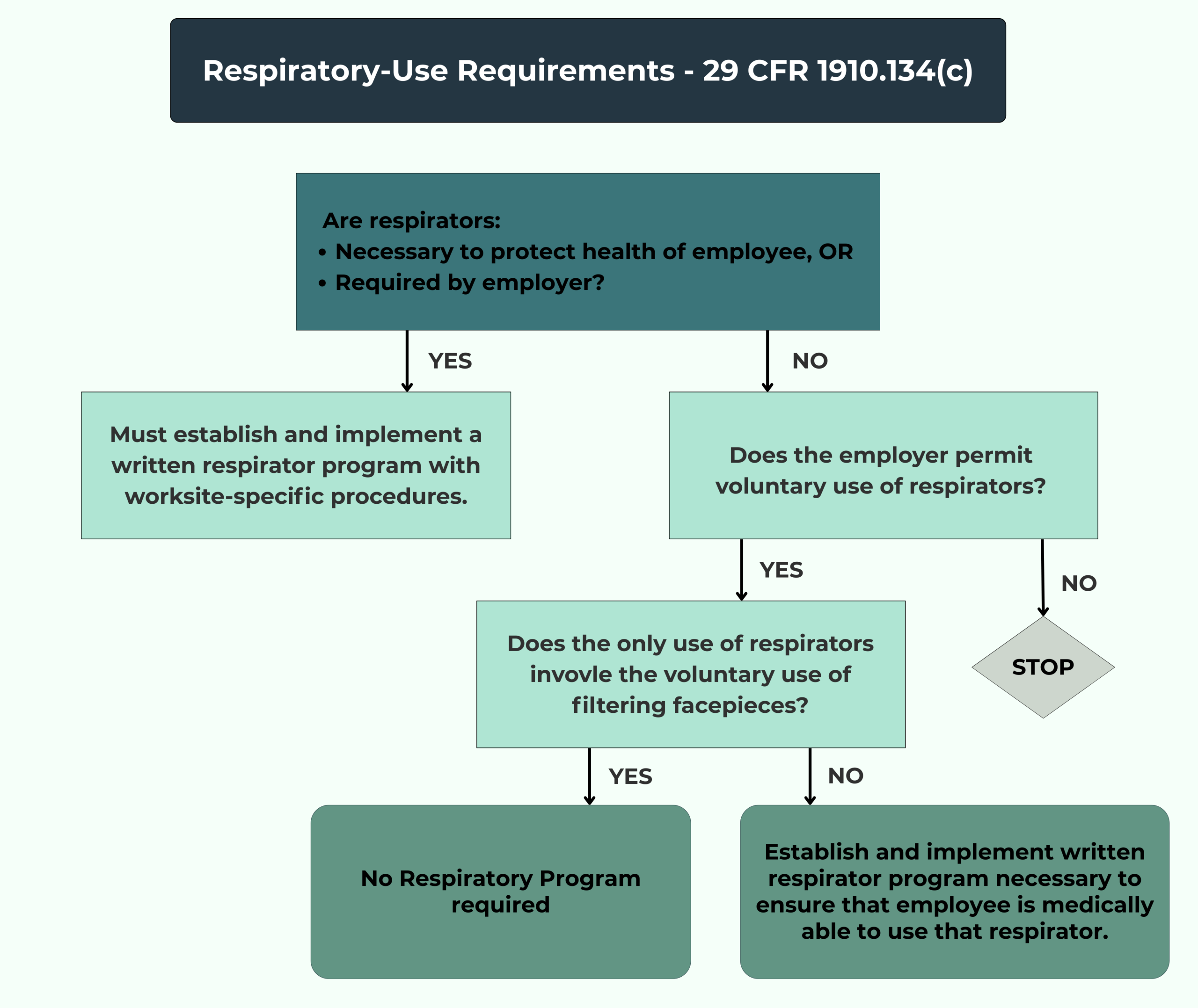
RPP Implementation Process
-
- Assign Program Administrator – Appoint trained individual to oversee program compliance.
- Develop Written Procedures – Create specific procedures for respirator use, cleaning, storage, and maintenance.
- Conduct Fit Testing – Complete qualitative or quantitative fit tests and maintain records.
- Train Employees – Provide comprehensive training on proper respirator use, limitations, and emergency procedures.
- Distribute Equipment – Issue properly fitted respirators and ensure adequate supplies of replacement parts and filters.
Verifying RPP Effectiveness
-
- Reviewing fit-test results and employee feedback
- Verifying maintenance, inspection, and storage practices
- Evaluating exposure levels after process changes
- Documenting updates and corrective actions
- Perform periodic OSHA compliance audits or internal program reviews
Seeking Support with Developing
your Respiratory Protection Program?
Do not hesitate to reach out to us via the “Free Consultation” button below! Our SEC experts offer complete assistance in development of respiratory protection program to ensure that your workplace is safe and compliant with federal and state regulations.
Serving the Southeast
NASHVILLE | CHATTANOOGA | BIRMINGHAM
Serving the Southeast
NASHVILLE | CHATTANOOGA | BIRMINGHAM
NASHVILLE
CHATTANOOGA
BIRMINGHAM