

Stormwater Pollution Prevention Plan (SWPPP)
SEC helps facilities develop and implement effective Stormwater Pollution Prevention Plans (SWPPP) that meet federal and state stormwater regulations. From construction sites to industrial operations, we guide clients through site evaluations, Best Management Practice (BMP) implementations, and continual compliance to obtain required permits and protect local waterways.
SWPPP Generation & Compliance
What is a SWPPP?
Stormwater runoff refers to rainwater and snowmelt that flows over land and impervious surfaces such as construction sites, rooftops, and parking lots. During this process, this runoff can collect harmful pollutants—including chemicals, trash, and sediments—ultimately contaminating local waterways and harming surrounding ecosystems. Stormwater Pollution Prevention Plan (SWPPP) is a comprehensive, site-specific document that outlines the strategies and practices to prevent pollutants in stormwater runoff from entering local water bodies. Required under the National Pollutant Discharge Elimination System (NPDES) as part of the EPA’s Clean Water Act, SWPPPs are essential for environmental compliance. A complete SWPPP typically includes:
-
- Identification of potential sources of stormwater pollution
- Description of BMPs to reduce pollutants in stormwater discharges
- Methods for controlling stormwater runoff volumes
- Procedures the operator will implement to comply with terms and conditions of necessary permits
Who Must Prepare & Submit a SWPPP?
A SWPPP is required by industries regulated under the discharge standards of 40 CFR 405-471. There are two main categories of SWPPP. While both types aim to minimize stormwater pollution, they differ in scop, regulatory triggers, and implementations based on site activity.
-
- Construction SWPPP
- Purpose – Prevent stormwater pollution during land-disturbing activities
- Required By – Construction projects that disturb more than 1 acre of land (or part of larger common development)
- Key Focus – Covered under the Construction General Permit (CGP) with focus on erosion and sediment control, temporary stormwater Best Management Practices (BMPs) which refers to combination of practices to prevent/reduce pollution generated from nonpoint sources, and site-specific inspections
- Non-Construction (Industrial) SWPPP
- Purpose – Control stormwater pollution associated with ongoing industrial operations
- Required By – Facilities involved in activities listed under the National Pollutant Discharge Elimination System (NPDES) program
- Key Focus – Long-term prevention (e.g. good housekeeping, spill prevention, BMPs, Stormwater Control Measures (SCMs), etc.), employee training, routine inspections, and site drainage mapping and monitoring protocols
- Construction SWPPP
What Are the SWPPP Requirements?
A standard SWPPP document includes the following components:
-
- Cover/title page
- Project and SWPPP contact information 3. Site and activity description with an annotated site map, including:
- Construction SWPPP
- Drainage patterns
- Approximate slopes after major grading activities
- Areas of soil disturbance
- Outlines indicating all areas that are not to be disturbed
- Locations of all major structural and non-structural controls
- The locations of expected stabilization activities
- Wetlands and surface waters present on the site
- Locations where stormwater may discharge to surface water or municipal separate storm sewer system (MS4)
- Drainage patterns
- Flow direction
- Location of industrial activities exposed to stormwater
- Material storage area, fueling stations, maintenance areas
- Locations of existing structural SCMs
- Locations where stormwater may discharge to MS4
- Identify receiving waters (e.g., nearby stream, creek, or river) and its status with EPA as “impaired” or “not impaired”
- Identify nearby wetlands
- Identify nearby Critical Habitat for Threatened or Endangered Species
- Identify nearby state-specific Exceptional Waters or Outstanding National Resource Waters
- Identification of potential pollutant sources and mitigation strategies
- Records of maintenance/inspection procedures
- SWPPP amendments and certifications
- Construction SWPPP
A strong SWPPP also addresses the following questions:
-
- Who is on the stormwater pollution prevention team?
- Who will install structural stormwater controls?
- Who will supervise and implement good housekeeping programs (e.g. site cleanup and disposal of trash and debris, hazardous material management and disposal, vehicle and equipment maintenance, etc.)?
- Who will conduct routine inspections of the site to ensure all BMPs are being implemented and maintained?
- Who is responsible for documenting and communicating changes to the SWPPP?
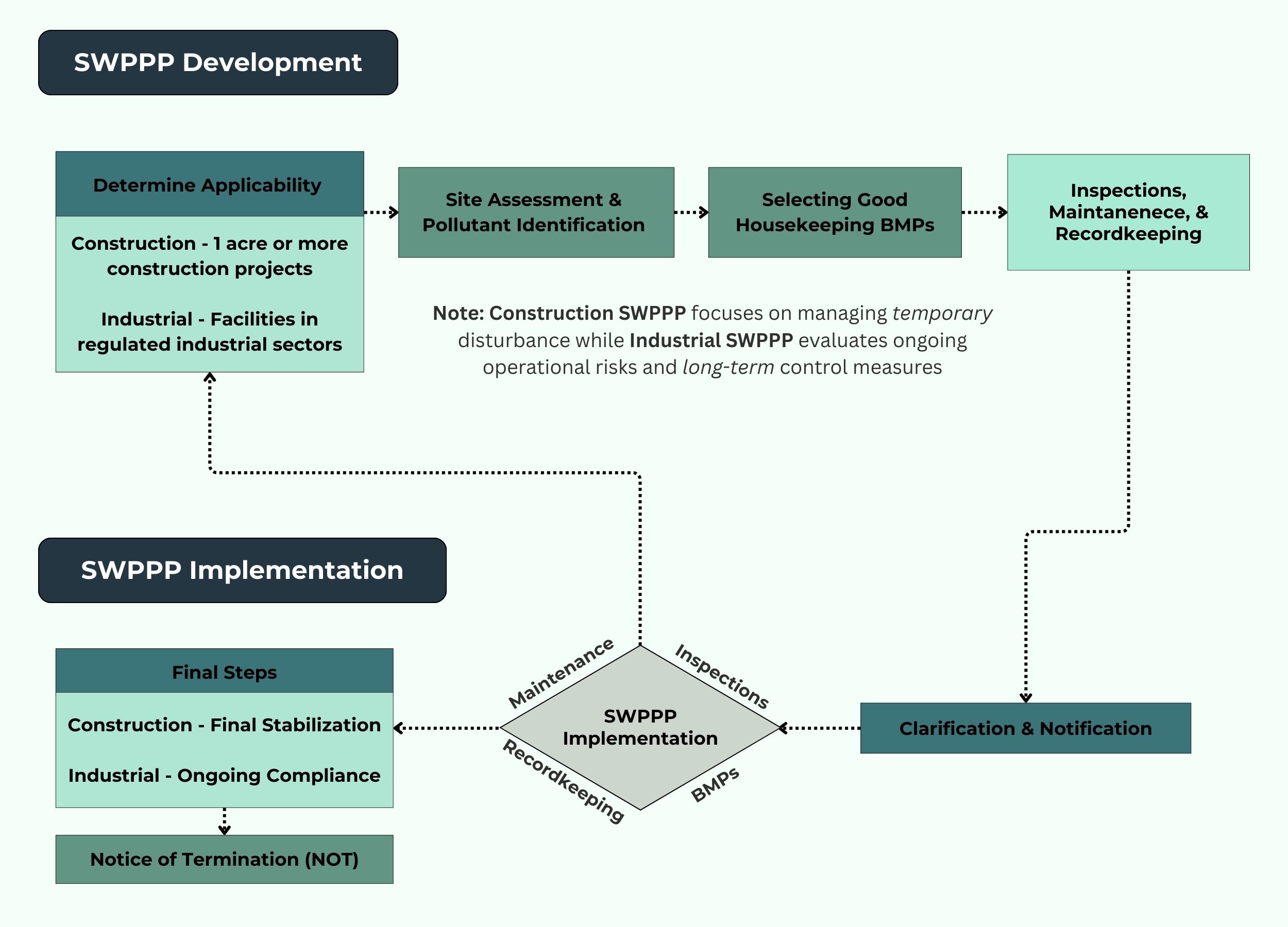
SWPPP Generation Process
Developing a SWPPP is a collaborative and phased process:
Continual Compliance & Recordkeeping
Maintaining an effective SWPPP requires:
- Ongoing site inspections
- Regular stormwater sampling, if required by the state
- Regular BMP and SCM maintenance
- Personnel training and communication
- Timely documentation of plan updates
- Etc.
SEC can support you even beyond plan developments, such as conducting industrial wastewater system analysis, acquiring NPDES permits, and more!
Seeking SWPPP Support ?
Our SEC team is ready to help you! Reach out to us via the “Get a Quote” button below to be assisted in SWPPP development, long-term stormwater management strategies,
and integrated compliance support.
Serving the Southeast
NASHVILLE | CHATTANOOGA | BIRMINGHAM
Serving the Southeast
NASHVILLE | CHATTANOOGA | BIRMINGHAM
NASHVILLE
CHATTANOOGA
BIRMINGHAM